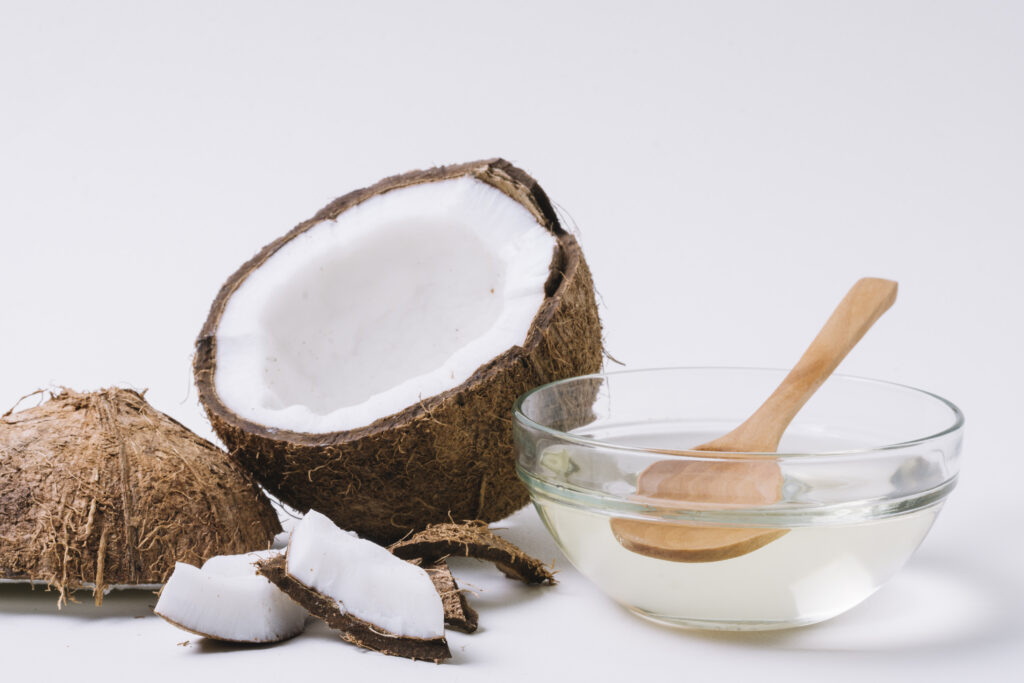
A More Natural Way to Massage & Unwind
Relax, rejuvenate, and restore your skin’s natural glow with the deep nourishment of Virgin Coconut Oil.
The Magic of VCO for Body Massage
Virgin Coconut Oil (VCO) is nature’s gift for your skin — it deeply nourishes, soothes, and rejuvenates without harsh chemicals. Rich in antioxidants and essential fatty acids, VCO penetrates deeply to hydrate and soften skin, improving texture and elasticity. Its natural antibacterial properties protect your skin, while its smooth texture makes massage effortless and luxurious. Whether you want to relax tired muscles or give your skin a healthy glow, Virgin Coconut Oil is the perfect natural choice for a soothing, enriching massage experience.
Why Use VCO for Body Massage?

Deep Hydration & Nourishment

Natural Relaxation & Muscle Relief

Antioxidant & Skin Protection

Chemical-Free & Gentle
Virgin Coconut Oil (VCO) is an ideal choice for body massage because it combines deep nourishment with gentle care. Rich in antioxidants and essential fatty acids, VCO penetrates the skin to provide lasting hydration, leaving it soft, smooth, and revitalized. Its natural soothing properties help relax tired muscles and ease stress, making every massage a rejuvenating experience. Free from harsh chemicals, VCO is safe for all skin types and offers natural protection against environmental damage. This makes it not just a massage oil, but a holistic skincare solution that nourishes both body and mind.

Trust & Purity in Every Drop
✅ Cold-Pressed from Kerala Coconuts
✅ No Chemicals, No Preservatives
✅ Dermatologist-Recommended
✅ Safe for Daily Use
At BelBe, we believe body care should be as pure and soothing as nature itself. That’s why our Virgin Coconut Oil is cold-pressed from premium, handpicked Kerala coconuts — preserving all its natural nutrients, antioxidants, and healing benefits. Free from chemicals, preservatives, or artificial fragrances, it’s 100% pure nourishment your skin will cherish. Dermatologist-tested and safe for all skin types, it deeply hydrates, relaxes muscles, and restores skin’s natural softness without any greasy residue. With BelBe, you’re not just giving your body a massage — you’re embracing authentic purity, holistic wellness, and nature’s most trusted care in every drop.
FAQs
Why is Virgin Coconut Oil (VCO) good for a body massage?
Virgin Coconut Oil is an excellent massage oil because it is rich in essential fatty acids (like Lauric Acid), Vitamin E, and antioxidants. It deeply moisturizes and hydrates the skin, making it soft and supple. Its natural anti-inflammatory and antimicrobial properties can also help soothe and protect the skin.
Does Virgin Coconut Oil solidify, and how should I use it for a massage?
Yes, VCO naturally solidifies at temperatures below 76∘F (around 24∘C). To use it for a massage, gently warm the oil by placing the container in a bowl of hot water for a few minutes until it liquefies. Apply the warm oil to the skin and massage using long, smooth, or circular strokes.
Is Virgin Coconut Oil suitable for all skin types, including sensitive or acne-prone skin on the body?
VCO is generally safe for most skin types, particularly for dry or sensitive skin, due to its moisturizing and soothing properties. However, it is considered moderately comedogenic (pore-clogging). If you have severely acne-prone skin on your body (like the back or chest), it’s best to do a small patch test first, or consider washing the area shortly after the massage.
How is Virgin Coconut Oil different from regular (refined) coconut oil for massage?
Virgin Coconut Oil (VCO) is extracted from fresh coconut milk without heat or chemicals, preserving its natural micronutrients, antioxidants, and fresh coconut aroma. Regular or refined coconut oil is often made from dried coconut meat (copra) and goes through refining, bleaching, and deodorizing (RBD) processes, which strip away many of the beneficial compounds and the natural scent. VCO is the preferred choice for its purity and maximum skin benefits.