
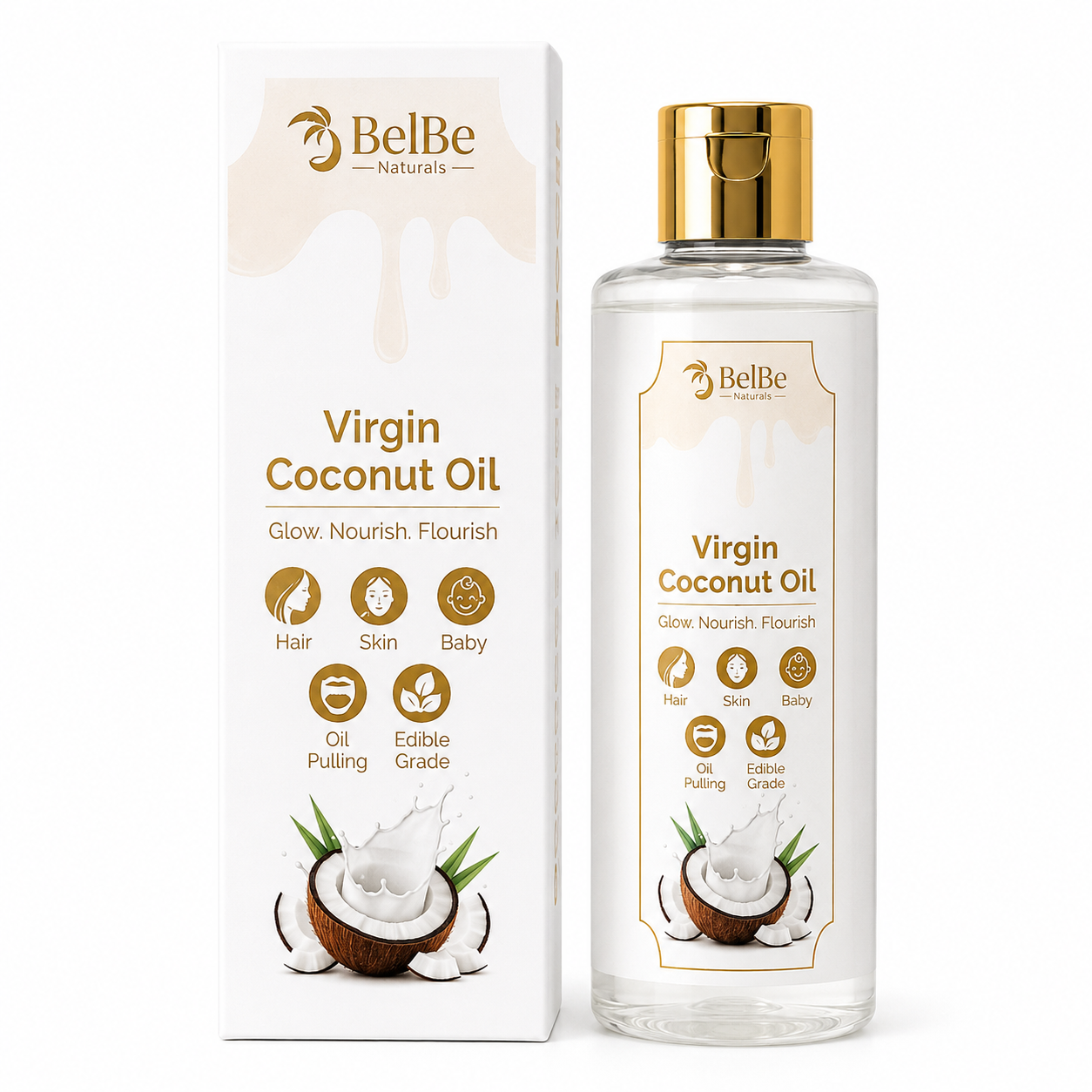
Virgin Coconut Oil for Lips
Pure, cold-pressed coconut oil as a simple, single-ingredient treatment for dry and chapped lips.
Is coconut oil right for your lips?
Answer three quick questions to see how BelBe VCO may fit into your lip care routine. Takes less than 30 seconds.
Whatever your result, we’d recommend patch testing on the inside of your wrist first.
What can coconut oil actually do for your lips?
Coconut oil is an emollient and occlusive ingredient. Here’s what that actually means in practice — not a list of promises.
What it does
As an occlusive, coconut oil forms a thin layer on the lips that can help slow moisture loss.
What you may notice
Lips may feel less tight or dry, especially in cold or dry weather.
How to use it
Apply a small amount directly to lips as needed throughout the day.
What it does
Coconut oil can help soften rough, flaking skin on chapped lips.
What you may notice
Chapped areas may feel smoother and less tight with regular use.
How to use it
Apply a slightly thicker layer to chapped areas and reapply as it wears off.
What it does
Coconut oil is an emollient, meaning it can help smooth the surface of dry or rough lips.
What you may notice
Lips may feel softer and more comfortable, particularly if they tend to flake.
How to use it
Massage gently into lips, including corners, before bed or during the day.
What it does
A thin layer can smooth the lip surface before applying lipstick or gloss.
What you may notice
Lipstick may glide on more evenly over smoother, less flaky lips.
How to use it
Apply a small amount, let it absorb for a minute, then apply your usual lip product.
What it does
Applying before bed gives the oil time to sit on the lips without being wiped or licked off.
What you may notice
Lips may feel noticeably softer the next morning, especially after a dry night.
How to use it
Apply a slightly thicker layer as the last step of your night routine.
How does it fit your lip concern?
Coconut oil isn’t a fix for every lip concern. Here’s how it tends to work depending on what you’re dealing with.
Dry & chapped
Occlusive oils like coconut oil are a reasonable, simple option for everyday dryness and chapping.
Watch for: reapply as needed, since it wears off with eating, drinking and licking your lips.
Cracked corners
Coconut oil may help soften the area, but persistent or painful cracked corners can have other causes worth checking with a doctor.
If it doesn’t improve or gets worse, see a doctor rather than relying on oil alone.
Flaking
The emollient effect can help smooth flaky patches, especially when applied before bed.
Avoid picking at flakes — let the oil soften them gently over a few days.
Before lipstick
A thin layer can smooth the surface so lip colour applies more evenly.
Let it absorb for a minute first, or it can make lipstick slide.
Known allergy
If you have a known coconut or tree-nut allergy, coconut oil may not be right for you, even applied topically.
Patch test on your inner wrist first, or choose a different product.
Your simple VCO lip care routine
A practical starting point — adjust based on how your lips respond.
Take a small amount
A little goes a long way — use less than you think you need.
Warm it
Warm the oil briefly between your fingertip and lip.
Apply
Smooth it over your lips, including the corners.
Let it absorb
Give it a minute before eating, drinking or applying lipstick.
Reapply as needed
Coconut oil isn’t long-wear — reapply through the day as it wears off.
Use overnight
A slightly thicker layer before bed gives it time to work uninterrupted.
What’s actually inside?
Virgin coconut oil is naturally made up mostly of fatty acids. Here’s what a few of them are — not a claim about what each one does for your lips.
Lauric acid
The most abundant fatty acid in coconut oil, typically making up roughly half its composition.
Caprylic acid
A shorter-chain fatty acid naturally present in coconut oil in smaller amounts.
Capric acid
Another naturally occurring fatty acid found alongside lauric and caprylic acid in coconut oil.
Before you use coconut oil on your lips
The point of this section is informed decision-making, not persuasion.
You may like it if you:
- Have everyday dry or chapped lips
- Prefer simple, single-ingredient care
- Want a natural base before lipstick
- Like a lightweight, non-sticky feel
- Don’t mind reapplying through the day
Think twice if you:
- Have a known coconut or tree-nut allergy
- Want sun protection — VCO has no meaningful, tested SPF
- Are prone to breakouts around your mouth
- Want a solid balm stick — VCO is a soft, meltable oil, not a stick
Our recommendation
Patch test first, and stop using it if you notice irritation. If you’re out in strong sun, use a lip balm with real, tested SPF alongside it. This is general guidance, not medical advice.
More ways to use Virgin Coconut Oil
BelBe Virgin Coconut Oil is a single, versatile oil — here’s how the same bottle is commonly used beyond lip care.
Face
Simple facial moisturising for dry skin.
Hair
Used as a hair oil for conditioning lengths and ends.
Body massage
Used as a simple, glide-friendly massage oil.
Makeup removal
Helps dissolve oil-based makeup before cleansing.
Baby massage
Used traditionally in Kerala for gentle infant massage.
Oil pulling
Used traditionally by swishing in the mouth as part of an oral care routine.
Frequently asked questions
Most people can use it daily without issue, as it’s a simple, single-ingredient oil. If you have a known allergy or sensitivity, patch test first and stop if you notice irritation.
There’s no fixed rule. It wears off with eating, drinking and licking your lips, so many people reapply several times a day, plus once before bed.
No. Coconut oil does not have a meaningful, tested SPF, and shouldn’t be relied on for sun protection. If you’re out in strong sun, use a lip balm with real, tested SPF instead or alongside it.
There isn’t good evidence that coconut oil changes natural lip pigmentation. It can help with dryness and softness, but we wouldn’t claim it lightens or changes lip colour.
Coconut oil has a moderate-to-high comedogenic rating, so if it’s applied beyond the lip line onto acne-prone skin, it could contribute to clogged pores for some people. Try to keep application to the lips themselves.
Yes, many people do. Apply a small amount, let it absorb for a minute, then apply your lip product as usual. Using too much can make lipstick slide.
Yes. BelBe Virgin Coconut Oil is cold-pressed from Kerala coconuts.
Yes, no fragrance is added. Any scent comes naturally from the coconut oil itself.
BelBe Virgin Coconut Oil is sourced from Kerala, India.
Store it in a cool, dry place, away from direct sunlight. Coconut oil naturally solidifies below about 24°C and turns liquid again above that — this doesn’t affect its quality.
Some people with sensitive skin tolerate it well; others don’t. Because it’s a natural ingredient rather than a formulated product, we’d recommend a patch test on your inner wrist first.
Simple ingredients. Thoughtful lip care.
Discover BelBe Virgin Coconut Oil for Lips.